


Getting around Sri Lanka can be low-cost and stress-free. Actually, hopping on buses ranks among the most affordable – and genuine – ways to see the country. Curious about riding local transport here? You’ve landed where answers live. We’ll walk you through paths to take, ticket prices, handy advice, along with what folks who live here actually do.
Why Choose Buses to Travel Around Sri Lanka?
Sri Lanka’s buses seem messy when you first see them – yet past the loud sounds, constant horn-blowing, or quick turns, there’s actually a pretty smart setup reaching nearly every spot on the island.
Fits any wallet – no matter your cash flow

A bus trip might only set you back LKR 40–50 for nearby spots; longer routes go from LKR 200 up to 700. So, hopping on a bus tends to save more cash compared to other ways of getting around.
Frequent trips all through the island
Buses go from big towns to tiny hamlets, starting at dawn until way after dark – so you’re free to move when it suits you instead of rushing on someone else’s schedule.
Get a real feel for the way people live around here
Riding a bus in Sri Lanka feels like jumping into daily life – tunes blasting from speakers, sellers stepping in at stops, also locals keen to talk.
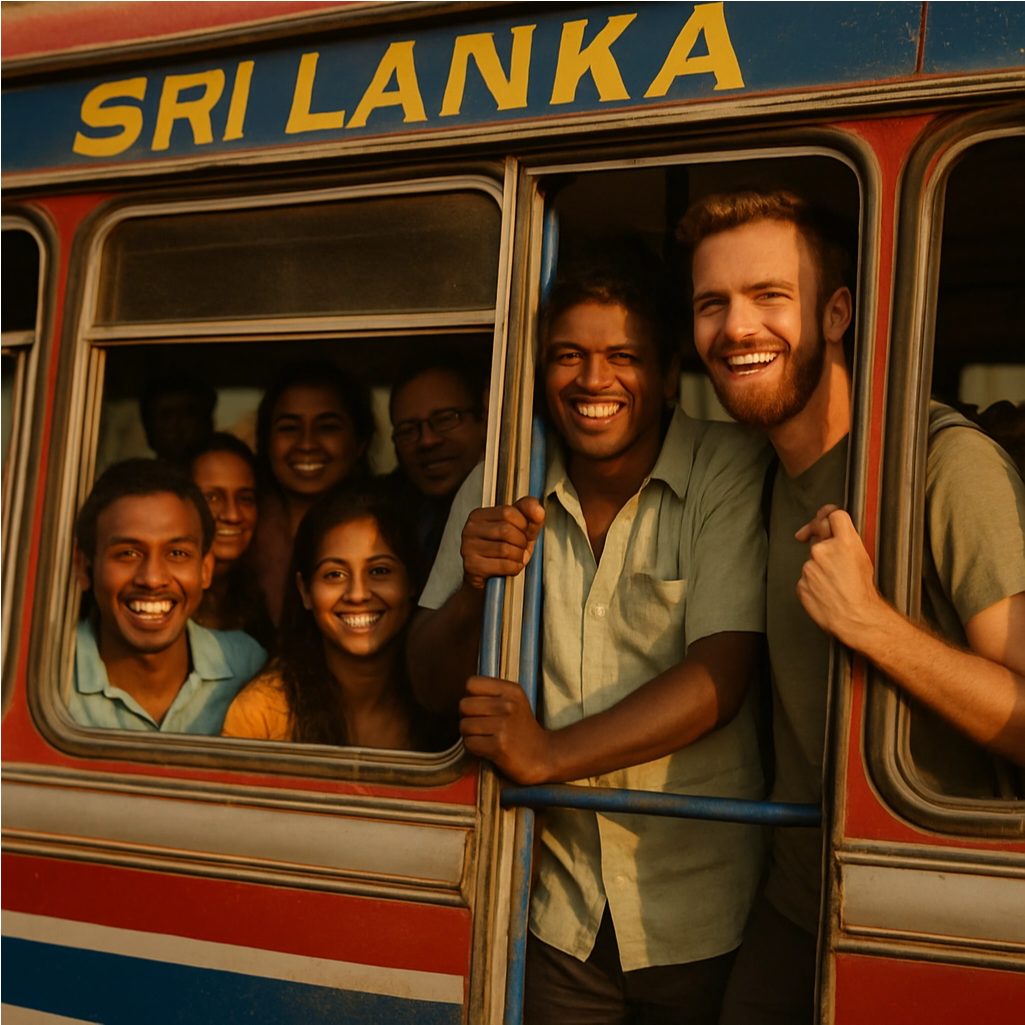
Understanding the Types of Buses in Sri Lanka
Every bus isn’t built alike. Spotting what sets them apart lets you pick faster rides or cozier seats – based on how you like to roll.
1. SLTB (Red) Public Buses
These buses run by the government show up everywhere on the island.

- Cheapest option
- Slower but reliable
- Fine choice when going short or even mid-range trips
2. Private Buses (Blue/White)
Run by private companies, usually quicker with tighter schedules.
- Slightly more expensive than SLTB
- Usually more crowded
- Some drivers speed up – grip hard if you’re scared.
3. Semi-Luxury & Luxury Buses
They run on extended paths such as Colombo to Kandy or from Colombo toward Galle.

- Air-conditioned
- More comfortable seating
- Fewer stops – so you get there quicker
4. Highway Buses (Expressway Buses)
Take Sri Lanka’s expressways – go faster, skip traffic.
- Great when going far
- Secure, pure – also steady
- Luggage space available
Example routes include:
- Colombo → Galle
- Colombo → Matara
- Colombo → Katunayake Airport
Popular Tourist Bus Routes in Sri Lanka
If you’re setting up a traditional trip across Sri Lanka, here are the paths you’ll probably use.
1. Colombo to Kandy
- Duration: 3–3.5 hours
- Options: Normal, Semi-luxury, AC buses
- Watch out – buses on highways skip this path
2. Kandy to Dambulla / Sigiriya
- Frequent buses come around every quarter to half hour – sometimes more often, sometimes less
- Perfect if you’re exploring the cultural triangle region
3. Colombo to Galle / Matara
- Time by highway: around 1.5 to 2 hrs
- Clean and comfortable AC buses
4. Ella to Galle / Matara (via Wellawaya)
You won’t find a straight-through express bus; however, switching at Wellawaya works just fine.
5. Anuradhapura to Jaffna
- A lengthy path, yet full of views, cuts across the flatlands up north
- Both SLTB and private options available
How to Find Bus Timetables and Routes
Finding the right bus details might seem tough – yet these tips help simplify things.
1. Google Maps
Quite spot-on when it comes to main roads.
Hit your pickup spot, then tap the bus symbol once you’ve picked where to get off.
2. Transport Apps and Websites
Look for:
- National Transport Commission site :- https://www.ntc.gov.lk/
- Bus schedule websites for SLTB :- https://sltb.eseat.lk/bus/schedules
- 3rd-party travel forums
3. Ask Locals
Sri Lankans are really welcoming, also quite supportive.
When unsure, just ask
- bus station staff
- shop owners
- other passengers
4. Bus Stand Signboards
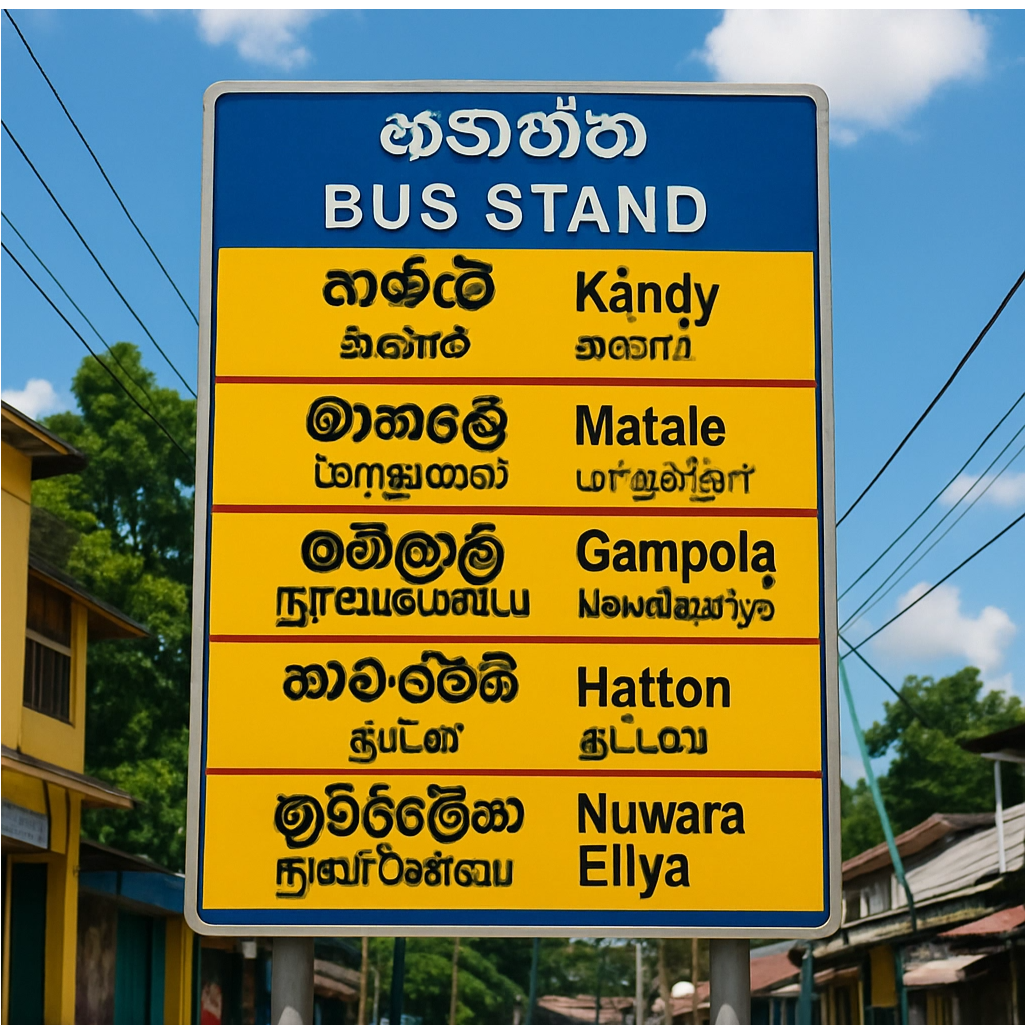
- Sinhala
- English
- Tamil
Just about each bus stop shows places you can go using:
How to Pay Bus Fares in Sri Lanka
Can you pay by card on buses?
Yes – but only some CTB buses have that facility yet. Most of payment made in cash.
How fares work
A conductor moves down the aisle, gathering fares from passengers.
Tell him where you’re headed → then he hands over a paper ticket.
Average fare examples
- Colombo → Galle: LKR 350–550
- Kandy → Matale: LKR 60–80
- Dambulla → Sigiriya: LKR 50–70
Tips to handle payments without hassle
- Have some small bills handy – like LKR 20, 50, or 100.
- Get on before it gets packed.
- If the conductor doesn’t hand it over, make sure you grab one.
Local Tips for Navigating Sri Lankan Buses Like a Pro
This is when knowing the area really helps. For a trip that’s hassle-free, secure, or fun, try these local hints:
1. Sit up close for a smoother trip – choose that spot when quiet matters more
Drivers might be quick, yet roads often curve. Upfront seating stays steady, simply because it’s built that way.
2. Hold your bags in your lap
Many buses lack room for bags. Got a backpack? Hold onto it tight.
3. Skip the rear rows
They’re the roughest, particularly out on country roads.
4. Board quickly
Crowded buses get full quick. Step on right away when it stops.
5. Get ready for tunes along with a buzzing vibe
Sri Lankan buses blast popular tunes on repeat – go with the flow.
6. Take highway coaches when traveling far
These run way cleaner, also far safer compared to regular ones.
7. Single women on trips? Grab a seat up front or by the window instead
Front seats usually feel better plus they’re safer.
8. Find out what time buses end
Many buses pull over when asked.
Say “Issaraha bahinawaaa” if you want to get off. Otherwise, give the bell a tap.
Common Mistakes Tourists Make (and How to Avoid Them)
Avoid these common errors so your trip goes easier.
1. Taking a bus that goes the wrong way
Some buses use almost the same number – check the display every time. That way you won’t get on the wrong one.
2. Expecting exact timetables
Plans don’t need to be tight. Go with a loose timeframe, about half an hour either way.
3. Hanging around for air-conditioned buses out on country roads
Out in the countryside, air-conditioned coaches aren’t common – expect to travel with windows cracked. While city routes might have AC, rural trips usually rely on natural airflow instead.
4. Stash your stuff in side pouches instead – keeps it close without drawing attention
Sri Lanka’s generally okay, though packed buses might draw thieves.
Use inner compartments.
5. Standing without gripping anything

Drivers hit the brakes fast – so hold onto something solid.
Advantages and Disadvantages of Bus Travel in Sri Lanka
Pros
- Extremely cheap
- A broad connection throughout the area
- Authentic cultural experience
- Frequent departures
Cons
- Might get busy when it’s rush time
- Not every time fits big suitcases
- How you drive might seem quick or messy
- Unpredictable timetables
Is Sri Lanka Safe for Bus Travel?
Folks often say Sri Lanka’s among the safest spots in Asia to visit. Millions ride buses every day – including students and solo female travelers.
Safety tips:
- Hold on tight to what’s yours
- Stay clear of trips after dark in the countryside
- Pick highway coaches when traveling far
Conclusion: Should You Navigate Sri Lanka by Bus?
If you want an affordable, real, and exciting way to see the island, figuring out Sri Lanka’s buses makes everything easier. The system covers almost everywhere, costs next to nothing, yet gives you moments you won’t forget. Use smart moves – pick your bus wisely, carry change, learn main roads – and getting around feels smooth, even if it’s new.
If you’re heading from Colombo to Galle, hiking across the hills, yet checking out ancient temples, buses get you around without draining cash.
Ready to explore Sri Lanka like a local?
Drop a line below if you’ve got ideas or doubts – happy to chat through your trip plans with ya!


